
What Can You Sublimate On? A Complete Guide to Materials & Substrates
You just unboxed your sublimation printer or Cricut Mug Press, and the first thing you want to do is print on everything in your house. The coffee mug, the cotton t-shirt, that wooden cutting board, your phone case. Then halfway through your first batch, something fades, washes off, or just doesn't show up at all.
Here's the thing nobody tells you up front: sublimation isn't about your design or your printer settings. It's about the material underneath. So what can you sublimate on, exactly? This guide covers what a sublimation blank actually is, which materials work, which ones don't, and how to spot a good blank before you spend money on a bad one.
What Is a Sublimation Blank and Why Does It Matter?
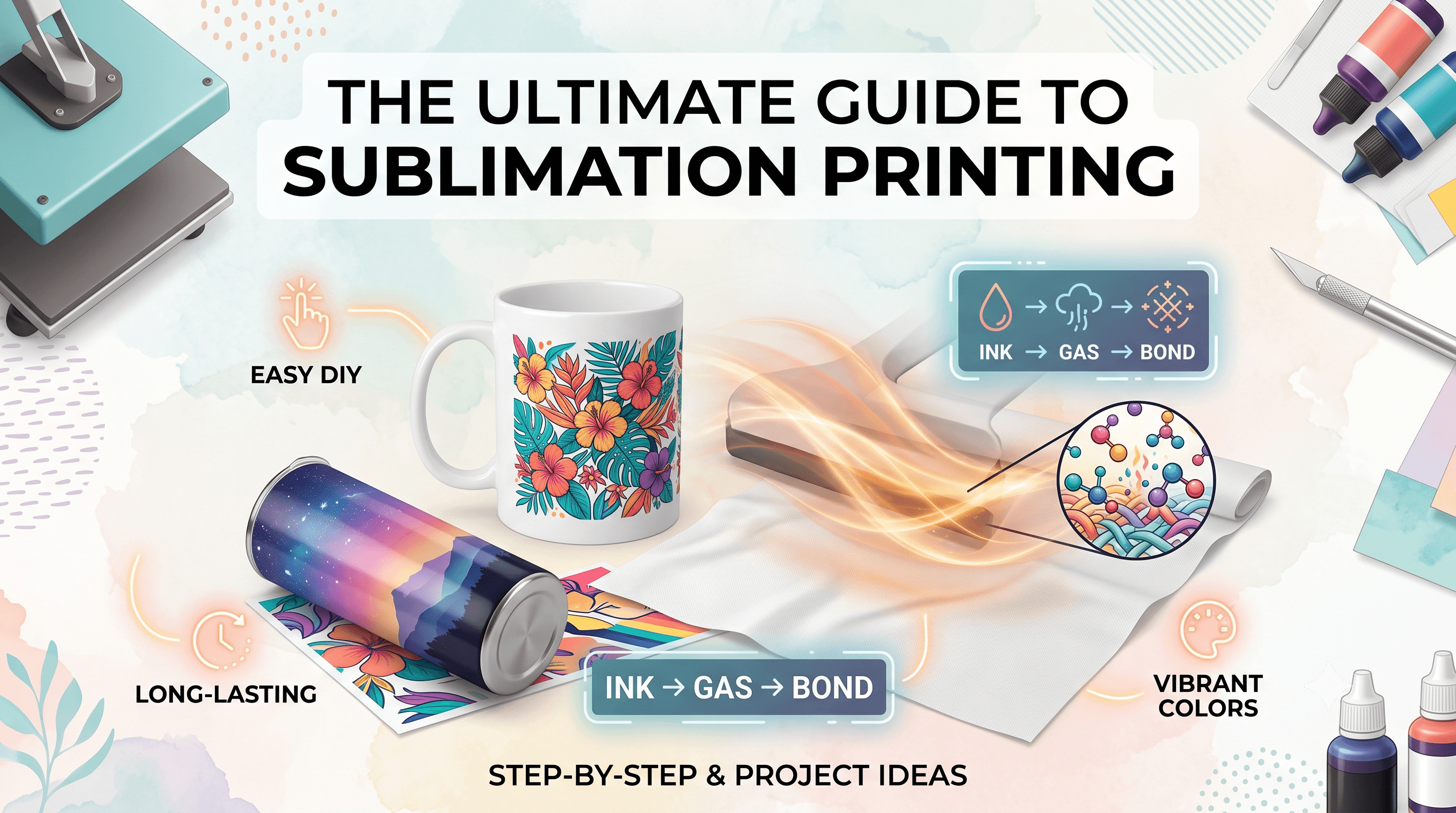
Sublimation ink doesn't work like regular printer ink or paint. Under heat, it turns into a gas and bonds directly with the material it's printing on. It doesn't sit on the surface, it becomes part of it. That's why the ink can survive washing and scrubbing on the right material, and why it disappears almost instantly on the wrong one.
This is also why the term "sublimation blank" exists. A sublimation blank is any item made specifically to receive sublimated ink, either because it's high in polyester content (for fabric) or because it has a special polymer coating (for hard items like mugs, tumblers, and ornaments). Manufacturers add that coating on purpose. Without it, the ink has nothing to grab onto.
This is the root of most beginner confusion. People assume sublimation works on any surface the way a regular sticker or iron-on does. It doesn't. Without the right material or coating, the ink washes off in the first laundry cycle, fades within days, or never transfers in the first place.
What Materials Can You Sublimate On?
Skip the long lists for a second. Here's the actual rule, and it only has two parts.
- Polyester fabric or high-poly blends. Aim for 65% polyester or higher. 100% polyester gives the most vibrant, longest-lasting results.
- Hard items with a polymer coating. This includes mugs, tumblers, tiles, ornaments, and coasters made specifically for sublimation.
That's it. That's what materials can be sublimated. If an item doesn't fall into one of these two categories, sublimation either won't work at all or will leave you with a faded, patchy mess that looks more like a smudge than a design.
So when you're wondering what material can be sublimated, skip the guesswork. Check the label for polyester percentage, or confirm the listing says the item is sold as a sublimation blank. If neither is true, don't risk it.
Things You Can Sublimate On: A Practical List
This isn't exhaustive (new sublimation blanks show up constantly), but it covers the sublimation items most people start with.
Fabric and soft goods
- Polyester t-shirts and athletic wear
- Polyester blend tote bags
- Mouse pads with a fabric top
- Polyester-faced pillow covers and blankets
Drinkware and hard goods
- Coated ceramic mugs
- Sublimation tumblers (stainless steel with a polymer coating). If you're also working with vinyl, it's worth understanding the difference between vinyl and sublimation on tumblers before you commit to a method
- Glass items with a specific sublimation coating (regular glass won't cut it)
- Coated metal water bottles
Home and gift items
- Coated ornaments (metal, wood-look composite, or coated acrylic)
- Coasters (coated cork, slate, or hardboard)
- Coated phone cases
- Puzzle blanks (coated cardboard or wood composite)
- Keychains (coated aluminum or acrylic)
These sublimation products cover most of what hobbyists and small craft sellers start with. Once you understand the underlying rule (polyester or coating), you'll spot new blanks easily as they come out.
Materials That Don't Work for Sublimation
This section saves you money, so pay attention.
- 100% cotton. No polyester fibers means nothing for the ink to bond with. Designs wash out almost immediately, sometimes after a single wash.
- Untreated wood. No coating, no bond. You'll get a faint, inconsistent print at best.
- Regular glass or uncoated ceramic. The ink simply won't adhere. It needs a specific sublimation coating, not just heat resistance.
- Dark or black items. Sublimation ink is translucent, not opaque. It needs a light or white base to show up. On dark surfaces, the color gets absorbed and your design becomes nearly invisible.
- Heat-resistant items without polyester or coating. Being able to handle high heat isn't the same as being chemically able to bond with sublimation ink. Both matter, and people mix them up constantly.
The most common beginner mistake is assuming any mug or shirt will work, then wondering why the design fades or disappears after a wash or two. It's not bad luck. It's chemistry.
Best Material for Sublimation: What Actually Gives the Best Results
No hedging here. For fabric, 100% polyester is the best material for sublimation, full stop. It produces the most vibrant colors and the longest-lasting prints. Drop below 65% polyester and you'll notice a visible difference: colors look washed out and muted compared to higher blends.
For hard goods, the best material to sublimate on is a light or white base with a high-quality, even polymer coating. That evenness matters more than people expect. Cheaper blanks sometimes have inconsistent coating, which shows up as blotchy or streaky results once you press them.
Brand name matters less than you'd think. A well-coated blank from a smaller, less-known supplier can perform just as well as a big-name brand, as long as the coating quality holds up. Color and base material are what actually drive results, not logos.
Planning a Batch? Estimate What You'll Need
Before you buy blanks in bulk, it helps to know how much you'll actually use:
Buying Sublimation Blanks: What to Check First
A few quick checks before you buy in bulk:
- Look for the word "sublimation" specifically in the listing, not just "customizable" or "blank." Those vaguer terms often mean the item isn't actually coated for this purpose.
- Check reviews for mentions of fading, streaking, or uneven coating. Other buyers will tell you if a blank is inconsistent.
- For fabric, confirm the polyester percentage is listed. If it's not listed, assume it's a low blend and treat it accordingly.
- Buy a small test batch before committing to a bulk order, especially from a supplier you haven't used before.
If you're using a Cricut Mug Press with Infusible Ink instead of traditional sublimation printing, the same rules apply. Infusible Ink relies on the same bonding principle, so blank requirements don't change. If you want more detail on the differences in process, here's how Infusible Ink compares to traditional sublimation.
Conclusion
Sublimation isn't picky about brand or price. It's picky about chemistry. Polyester fabric or a quality polymer coating, paired with a light or white base. That's the entire rule, and once it clicks, "what can I sublimate on" stops being confusing.
Once you've got the right blank, don't let a broken SVG hold up the print. If your design won't upload to Design Space or Silhouette Studio, CutMagic fixes pattern fills, clipping paths, and other common errors in seconds so you can get straight to pressing.
Start with a small batch of known-good blanks before you scale up to bigger projects or a craft business. It's a lot cheaper to learn this lesson on five mugs than fifty.